
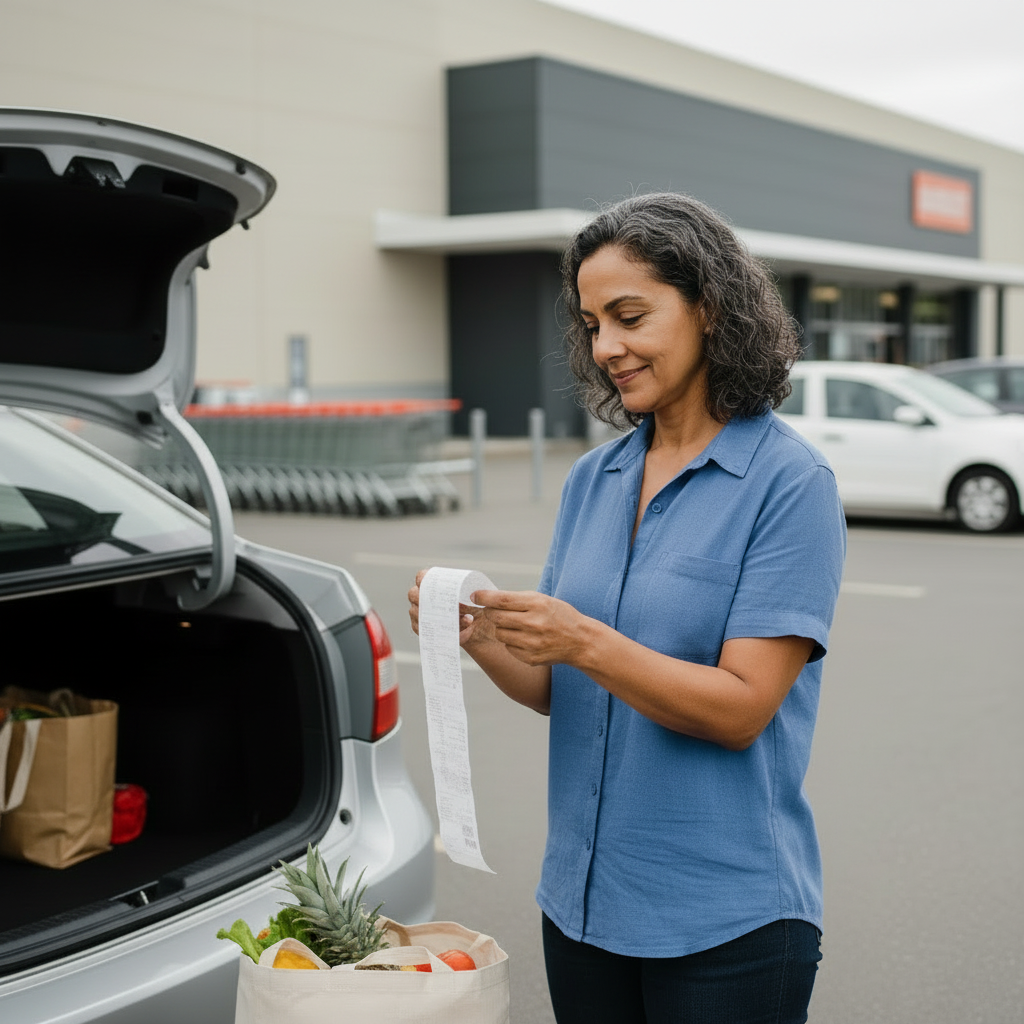
Introduction: When an Ordinary Grocery Trip Feels Heavy
Most people expect the grocery store to be a routine part of life – a weekly errand, nothing more. But today, many people describe grocery shopping as one of the most stressful moments of their week.
You walk in intending to buy a few things.
You walk out frustrated, discouraged, or anxious.
You may find yourself:
- irritated at prices
- overwhelmed by options
- stressed about overspending
- guilty about what you bought
- afraid to look at the total
- disappointed when the cart isn’t even full
This is not just about rising prices – though that certainly matters. The grocery store has become a powerful emotional trigger because it combines:
- unpredictability
- social pressure
- rising costs
- decision fatigue
- time pressure
- responsibility to nourish yourself or your family
This article explains why grocery shopping can feel so emotionally heavy – and more importantly, how you can use the LOWER Method to stay calm and grounded along the way. Grocery-store stress is just one example of the emotional load explored in the main everyday expenses guide, which helps explain why routine costs can feel so heavy.
Why The Grocery Store Creates So Much Stress
Grocery shopping seems simple, but from a psychological perspective, it’s one of the most emotionally complex errands we do.
Here’s why you may feel stressed before you ever step inside.
1. Grocery stores combine financial stress with sensory overload
Bright lights, crowded aisles, noisy freezers, advertisements, smells, dozens of choices per shelf – this environment overwhelms the nervous system quickly.
When your senses are overloaded, your emotions intensify.
2. Prices are constantly rising and unpredictable
You expect groceries to cost a certain amount. When reality doesn’t match your expectations – again and again – your brain interprets this as:
- unpredictability
- instability
- potential danger
This creates anxiety even if you don’t consciously think about it.
3. Grocery stores require hundreds of micro-decisions
Every aisle requires choices:
- brand vs. generic
- small size vs. bulk
- fresh vs. frozen
- sale vs. full price
- healthy vs. affordable
- what you want vs. what you “should” buy
Decision fatigue builds quickly, especially when money is tight.
4. Social pressure increases emotional weight
People sometimes judge what’s in their cart – especially if:
- you’re buying treats
- you’re skipping healthier options because of cost
- you’re choosing cheaper brands
- you’re sticking to a strict budget
This pressure is subtle, but powerful.
5. Grocery shopping triggers deeper identity emotions
Buying food is directly tied to:
- caregiving
- competence
- nourishment
- family stability
- responsibility
When money feels tight, these identity-based emotions intensify.
Common Emotional Reactions People Experience in Grocery Stores
If you’ve ever felt frustration or anxiety in a grocery store, you’re completely normal.
Here are some emotional patterns people commonly report.
1. Anxiety while shopping
You may feel:
- tenseness in your chest
- racing thoughts
- fear of overspending
- dread about the total
- pressure to make the “right” choices
Anxiety is a natural response to unpredictable costs and decision overload.
2. Irritability or frustration
You might snap or feel agitated when:
- an item is more expensive than last week
- you can’t find what you need
- your child asks for things
- someone blocks the aisle
- a necessary item isn’t on sale
These irritations are often emotional overflow from financial stress.
3. Guilt after checkout
Many people feel guilty because:
- the bill was higher than expected
- they bought convenience items
- they skipped healthier options because of price
- they treated themselves to something small
This guilt comes from unrealistic expectations of perfection.
4. Shame about what’s in the cart
Shame may appear if you:
- choose cheaper brands
- avoid expensive fresh produce
- rely on bulk or discount items
- feel judged by others in line
Shame rarely reflects reality – only internal pressure.
5. Emotional exhaustion afterward
You may leave the store feeling:
- drained
- defeated
- discouraged
- frustrated with yourself
- overwhelmed by rising prices
This is a natural reaction to financial and sensory overload.
Why Grocery Store Stress Feels Worse Today
Grocery shopping wasn’t always this emotionally heavy. The last few years have amplified stress dramatically.
Here’s why.
1. Prices have risen faster than in decades
Every cart total is a reminder of financial unpredictability.
2. Inventory and availability changed
Shortages, substitutions, and out-of-stock items create tension and disappointment.
3. Shopping has become more expensive for families
Kid snacks, school lunches, special diets, and household basics have all increased in price.
4. Social expectations changed
People feel pressure to:
- eat clean
- buy organic
- avoid processed foods
- meal prep
- feed their families perfectly
These expectations are emotionally unrealistic when budgets are tight.
How the LOWER Method Helps During Grocery Store Stress
The LOWER Method – Label, Own, Wait, Explore, Resolve – helps you slow down and regulate your emotional state before overwhelm takes over.
Here’s how each step applies to grocery shopping.
L – Label (“That’s frustrating when…”)
Start with emotional clarity:
“That’s frustrating when groceries cost more every week and I feel stressed before I even walk in the door.”
Labeling reduces tension almost instantly.
O – Own (“I feel frustrated when…”)
Connect with your internal reality:
“I feel frustrated when I’m trying to make good decisions but everything feels overwhelming and expensive.”
Owning the feeling gives your brain a sense of stability.
W – Wait
Pause before reacting.
In a store, this might look like:
- slowing your breathing
- stepping aside for a moment
- grounding your feet
- looking away from the shelves for 10 seconds
Waiting disrupts the emotional spiral.
E – Explore (4 useful directions)
Exploration gives your mind options.
1. Explore what part of grocery shopping is hardest today
- choices
- total cost
- rising prices
- pressure to feed your family
- time pressure
Naming the trigger reduces its power.
2. Explore whether expectations need adjusting
Maybe your mental model of grocery prices is outdated.
3. Explore ways to reduce decision fatigue
Examples:
- shopping with a list
- using a simple meal plan
- limiting brand comparisons
- shopping the same store each week
Consistency reduces emotional burden.
4. Explore one small improvement
Such as:
- getting only essentials today
- choosing lower-stress stores
- avoiding peak crowd times
- switching to curbside pickup occasionally
Small changes = big emotional relief.
R – Resolve
Pick one clear next step:
- stick to a simple list
- allow one small treat without guilt
- adjust next week’s meal plan
- check prices before arriving
- choose a calmer time to shop
Resolution restores confidence.
Real-Life Examples of Grocery Store Emotional Stress
Example 1: Sticker shock on basics
A normally cheap staple has doubled in price.
Emotional meaning:
“I can’t control this.”
Example 2: Hard choices between cost and health
Fresh produce feels too expensive.
Emotional meaning:
“I’m trying to do the right thing.”
Example 3: Pressure from kids asking for extras
You feel torn between budget and joy.
Emotional meaning:
“I don’t want to disappoint them.”
Example 4: Feeling judged by others
You worry someone is evaluating your cart.
Emotional meaning:
“I’m doing my best under pressure.”
Frequently Asked Questions
Why does grocery shopping stress me out more than other errands?
Because it combines money pressure, sensory overload, decision fatigue, and identity-based responsibility.
Why do prices trigger such strong emotions?
Because rising costs signal unpredictability and challenge your sense of control.
How do I stop feeling guilty about what I buy?
Use the LOWER Method to slow down judgment and reconnect with emotional clarity.
Why do I feel overwhelmed before I even walk inside?
Your brain anticipates stress based on past experiences – a normal response.
How can I shop without feeling emotionally drained?
Simplify, plan lightly, and use small grounding techniques before and during your trip.
Closing: Grocery Stress Isn’t a Personal Failure – It’s an Emotional Experience
Feeling overwhelmed in the grocery store doesn’t mean you’re weak, irresponsible, or bad with money. It means you’re human, living in a financially unpredictable world with real responsibilities on your shoulders.
Your emotions make sense.
Your stress is valid.
Your frustration is normal.
Using the LOWER Method helps you take back emotional control, reduce overwhelm, and approach grocery shopping with clarity and confidence – instead of dread.
You deserve to feel calmer.
And with the right tools, you can.





Leave a Reply